
The sole purpose test is the foundation rule of every self-managed superannuation fund in Australia. It is set out in section 62 of the Superannuation Industry (Supervision) Act 1993 (the SIS Act) and it sits behind almost every other compliance requirement. For trustees considering whether to hold physical gold, silver or platinum bullion as part of their fund’s portfolio, understanding this test is essential, because more bullion-related contraventions are reported under the sole purpose test than under any other single rule.
What the test actually says
In plain language, the sole purpose test requires that an SMSF be maintained solely for the purpose of providing retirement, ill-health or death benefits to members and their dependants. Every asset, every transaction and every decision the trustees make must serve that single goal. The test does not prohibit any particular asset class; it prohibits any present-day benefit being derived from fund assets by members, their relatives or any related party. The ATO’s detailed view of how the test is applied is set out in ruling SMSFR 2008/2.
The Australian Taxation Office, which regulates SMSFs, applies the test strictly. A fund found to be in breach can lose its complying status, which can lead to the fund’s assets and income being taxed at the highest marginal rate (currently 45 per cent) rather than the 15 per cent concessional rate that complying funds enjoy. Trustees can also be personally penalised, disqualified, or in serious cases face civil or criminal sanctions.
How the test applies to physical bullion
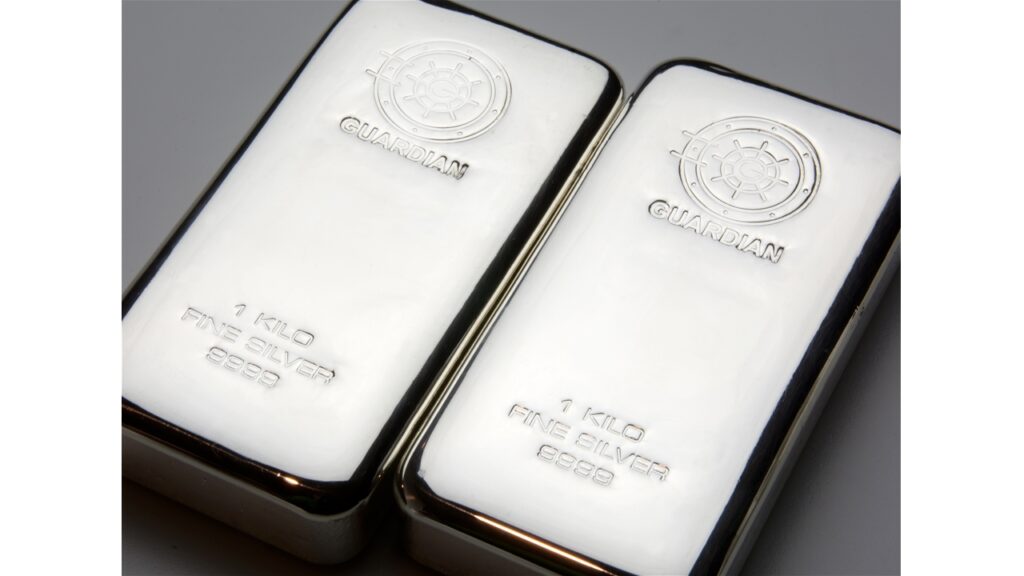
Physical bullion is, in principle, an entirely legitimate SMSF investment. The challenge is that, unlike shares or cash, bullion is tangible, portable and inherently attractive to the people who own it. The very qualities that make gold and silver appealing investments are also the qualities that make it easier to inadvertently breach the sole purpose test.
Several practical principles flow from the test when an SMSF acquires bullion.
Ownership must be in the name of the fund. The bullion must be purchased in the name of the SMSF, using SMSF funds, and the purchase invoice must clearly identify the fund as the buyer. A common mistake is for a member to buy bullion personally and later attempt to transfer it into the fund. Section 66 of the SIS Act prohibits SMSFs from acquiring most assets from related parties (members and their relatives), with limited exceptions. Bullion does not fall within those exceptions.
The fund’s bank account must pay. Payment for bullion purchased by an SMSF must come from the fund’s own bank account. Paying personally and reimbursing the fund later, or routing the payment through a member’s account for convenience, creates contribution and related-party issues that can be very difficult to unwind.
No personal use, ever. Members cannot wear, display, photograph themselves with, give as a gift, lend, or otherwise use fund-owned bullion. Even something that seems harmless — posing for a photo with a fund-owned coin — has been treated by auditors as evidence that the sole purpose test has been breached. The test is concerned with whether the asset is providing any present-day benefit, and “showing it off” is a benefit.
No use as security. SMSF-owned bullion cannot be pledged as collateral for a personal loan, a related-party loan, or any other present-day financial benefit to a member. The asset must remain firmly held within the fund and available only at retirement.
Storage and the sole purpose test
The SIS Regulations technically permit investment-grade bullion to be stored at a member’s residence, in contrast to collectables, which are explicitly prohibited from being kept at a related party’s home under Regulation 13.18AA. However, in practice, the ATO and SMSF auditors strongly prefer independent third-party vault storage for bullion held in an SMSF. Home storage creates an obvious risk that the asset could be accessed, used or perceived as available for current-day benefit, which can be construed as a sole purpose breach. The practical position adopted by the ATO and by most SMSF auditors is that independent vault storage is the safer and strongly preferred option for all SMSF bullion.
Where bullion is stored with an independent vault provider, the storage agreement should be in the name of the SMSF. The metal should be allocated to the fund (so that specific bars and coins are identified as belonging to the fund) rather than pooled with other clients’ holdings in an unallocated arrangement. Allocated storage is much easier for auditors to verify and much harder for the ATO to challenge on sole purpose grounds.
The link to the investment strategy
The sole purpose test does not exist in isolation. It works alongside the requirement, under Regulation 4.09 of the SIS Regulations, that every SMSF formulate, review and give effect to a written investment strategy. Before adding physical bullion to the fund’s portfolio, trustees would typically update the strategy to confirm that precious metals are consistent with the fund’s risk profile, return objectives and liquidity needs.
Auditors will look for evidence that the trustees have considered these matters. A strategy that does not mention bullion when bullion is held, or that has not been updated since the bullion was purchased, can prompt the auditor to qualify the audit report and lodge an Auditor Contravention Report with the ATO.
Common ways trustees breach the test
Patterns that auditors flag most often include trustees photographing themselves with fund-owned coins or bars, members storing fund bullion alongside personal valuables in the same safe deposit box, trustees buying coins that the broader market values for rarity or numismatic interest rather than metal content, transferring privately owned bullion into the SMSF without an arm’s-length purchase from a third party, and failing to update the investment strategy before acquiring bullion.
Each of these is typically picked up at audit. Where the financial threshold tests in the ATO’s auditor reporting framework are met (broadly, contraventions worth more than 5 per cent of fund assets, or more than $30,000, or any contravention in a new fund), the auditor is required to lodge a contravention report within 28 days of completing the audit.

Consequences of a breach
The ATO has a range of responses available where a sole purpose test breach is identified. For less serious or first-time issues, the regulator may issue a rectification direction requiring the trustees to fix the problem within a set timeframe, or an education direction requiring the trustees to complete an approved course. More serious or repeated breaches can attract administrative penalties — currently $4,200 per individual trustee per offence under the SIS penalty regime — which means a fund with four individual trustees can face $16,800 in penalties for a single breach. A corporate trustee attracts a single penalty rather than one per director, which is one of the reasons many SMSFs use a corporate trustee structure. In the most serious cases the ATO can disqualify trustees, declare the fund non-complying, or pursue civil or criminal action.
The trustee declaration
Every person who becomes a trustee or director of a corporate trustee of an SMSF must sign the ATO’s Trustee Declaration within 21 days of appointment. The declaration confirms that the trustee understands their duties, including the sole purpose test. Signing the declaration is not a formality. It is the trustees’ written acknowledgement that they understand what the test requires of them, and the ATO can and does point back to the declaration when assessing breaches.
What to take from this
The sole purpose test is not a technicality. It is the single most important rule a trustee can keep front of mind when holding bullion in an SMSF. The practical safeguards — buying in the fund’s name with the fund’s money, storing the metal independently and in allocated form, never using or displaying the bullion personally, and keeping the investment strategy current — are straightforward to apply, and they are what auditors will be checking.
The information in this article is general in nature only. It does not take into account any particular fund’s circumstances, trust deed or member needs. Anyone considering acquiring bullion through an SMSF, or who is uncertain whether existing arrangements comply, should consult a qualified SMSF accountant, auditor or solicitor before acting.
Follow Us On Socials


Subscribe to our free market reports by creating a Guardian Gold Account Here.
Disclaimers: Guardian Gold, Registered Office, Scottish House, 100 William Street, Melbourne, Victoria, 3000. ACN 138618176 (“Guardian Vaults” & “Guardian Gold”) All rights reserved. Any reproduction, copying, or redistribution, in whole or in part, is prohibited without written permission from the publisher and/or the author. Information contained herein is believed to be reliable, but its accuracy cannot be guaranteed. It is not designed to meet your personal situation.
Guardian Gold, its officers, agents, representatives and employees do not hold an Australian Financial Services License (AFSL), are not an authorised representative of an AFSL and otherwise are not qualified to provide you with advice of any kind in relation to financial products. If you require advice about a financial product, you should contact a properly licensed or authorised financial advisor.
The information is indicative and general in nature only and is prepared for information purposes only and does not purport to contain all matters relevant to any particular investment. Subject to any terms implied by law and which cannot be excluded, Guardian Gold, shall not be liable for any errors, omissions, defects or misrepresentations (including by reasons of negligence, negligent misstatement or otherwise) or for any loss or damage (direct or indirect) suffered by persons who use or rely on such information.
The opinions expressed herein are those of the publisher and/or the author and may not be representative of the opinions of Guardian Gold, its officers, agents, representatives and employees. Such information does not take into account the particular circumstances, investment objectives and needs for investment of any person, or purport to be comprehensive or constitute investment or financial product advice and should not be relied upon as such. Past performance is not indicative of future results.
Due to various factors, including changing market conditions and/or laws the content may no longer be reflective of current opinions or positions. You should seek professional advice before you decide to invest or consider any action based on the information provided. If you do not agree with any of the above disclaimers, you should immediately cease viewing or making use of any of the information provided.