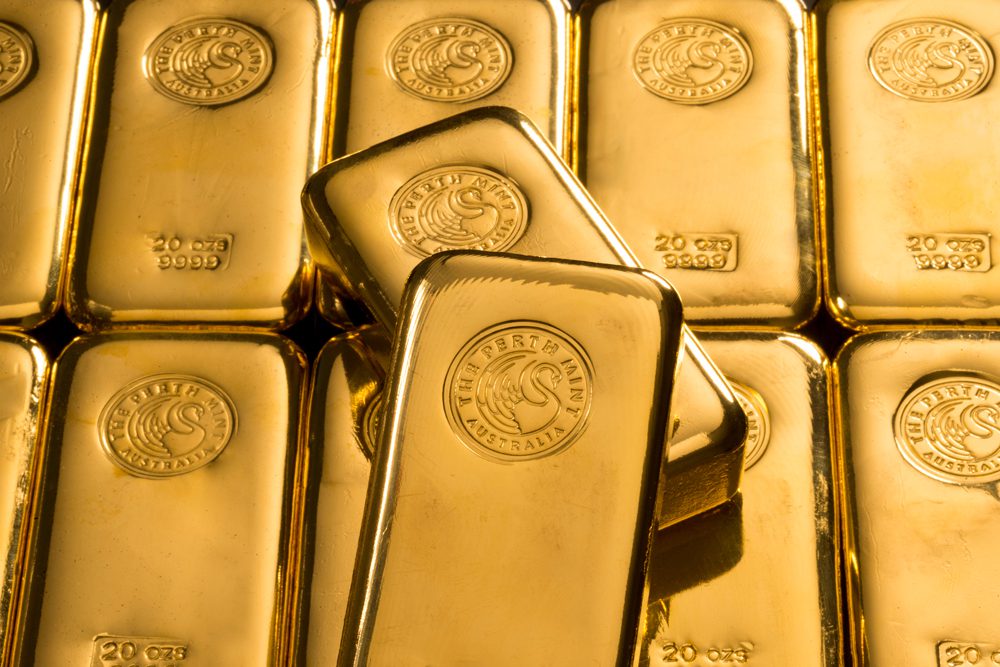
How To Buy Gold In Australia : A Practical Guide
Gold has drawn Australian buyers through every kind of market, and 2026 has been no exception, with the metal trading near record highs above AUD $7,900 an ounce in January. Buying gold for the first time raises practical questions. What counts as investment-grade? Which way of investing suits you? Where do you buy without overpaying, how is it taxed, and where do you keep it? This guide walks through each step, from the different ways to invest to storage and…
Gold ETFs vs Physical Bullion: An Australian Comparison
Custody, redemption rights and counterparty exposure across ASX-listed gold products — and how holding physical metal sits differently. Since the first gold-backed exchange-traded product listed on the ASX in 2003, holding gold through a stockbroking account has become an accessible alternative to owning physical bars and coins. In a single transaction, an investor can gain exposure to the gold price, trade in and out during market hours, and never handle a bar. What is less visible on the trading screen…

How to Spot a Fake Gold or Silver Bar
Counterfeit Bullion and the Science of Verification Why every modern dealer’s bench looks the way it does, and what the verification science can and cannot do. In 2012, a gold dealer in Manhattan’s diamond district bought what appeared to be a sealed 10-ounce PAMP Suisse gold bar. The assay card was perfect. The serial number checked out. A surface X-ray reading registered as gold. But something about the weight felt fractionally wrong. He drilled into it. Inside, a tungsten core sheathed…

How Gold and Silver Are Taxed Inside an SMSF
How Gold and Silver Are Taxed Inside an SMSF- GST, CGT and Concessional Rates Several distinct tax rules apply to physical gold and silver held inside a complying self-managed superannuation fund. This article describes how GST, capital gains tax, the concessional super tax rate, the pension phase exemption and the new Division 296 tax apply to bullion held by a fund in the 2025–26 and 2026–27 financial years. The rules are conditional, the documentation matters, and the treatment of any…

The Annual SMSF Audit Explained: What Auditors Look For When Bullion Is Involved
Every self-managed superannuation fund in Australia must be audited every year. This is not optional and does not depend on the size of the fund, the level of activity, or whether the fund is in accumulation or pension phase. The audit must be completed by an independent, ASIC-registered SMSF auditor, and the audit report is a precondition for lodging the fund’s annual return with the ATO. For funds holding physical bullion, the audit is the moment when storage arrangements, ownership…

Bullion or Collectable? A Critical Distinction for SMSFs
For self-managed superannuation funds, the question of whether a particular gold or silver product is “bullion” or a “collectable” is far more than semantic. The two categories are governed by different rules under the Superannuation Industry (Supervision) Regulations 1994, attract different storage and insurance obligations, and carry very different audit risk. Trustees who buy what they assume is bullion but which their auditor later classifies as a collectable can face contravention reports, rectification directions and, in serious cases, penalties. The…

Storage Requirements for SMSF-Owned Precious Metals: Compliance Essentials
How and where physical gold and silver is stored inside a self-managed superannuation fund is one of the most heavily scrutinised areas in an SMSF audit. The rules are clear on paper but applied with judgement, and what feels intuitive to a private investor — keeping precious metals at home, in a safe — is often the wrong answer when the metal is owned by a super fund. This article sets out the storage framework, the practical options, and what…
The Sole Purpose Test: What SMSF Trustees Need to Know When Holding Physical Bullion
The sole purpose test is the foundation rule of every self-managed superannuation fund in Australia. It is set out in section 62 of the Superannuation Industry (Supervision) Act 1993 (the SIS Act) and it sits behind almost every other compliance requirement. For trustees considering whether to hold physical gold, silver or platinum bullion as part of their fund’s portfolio, understanding this test is essential, because more bullion-related contraventions are reported under the sole purpose test than under any other single…

Silver’s Coming Supply Test Is Not About Growth — It’s About Arithmetic
By Nigel Culshaw Silver has spent much of the past decade oscillating between its identity as a monetary metal and its role as an industrial input. Investors debate inflation hedges, central-bank policy and speculative positioning, while manufacturers quietly lock in supply for applications that cannot function without it. What is now becoming clear is that the next phase of silver demand will not be driven by sentiment or cycles, but by the physical architecture of the future economy. Transport is…

Beyond Jewellery and Cars, Platinum Anchors the Modern Economy
Platinum has long been cast as the understudy in the precious metals world, a noble element best known for jewellery and catalytic converters. But a closer look at its industrial footprint reveals a metal at the heart of some of the most advanced and essential technologies of our time. Across cars, refineries, data centres, hospitals, laboratories and even defence systems, platinum’s unique blend of durability, conductivity and resistance to heat and corrosion makes it irreplaceable. In transportation, it is re-emerging…